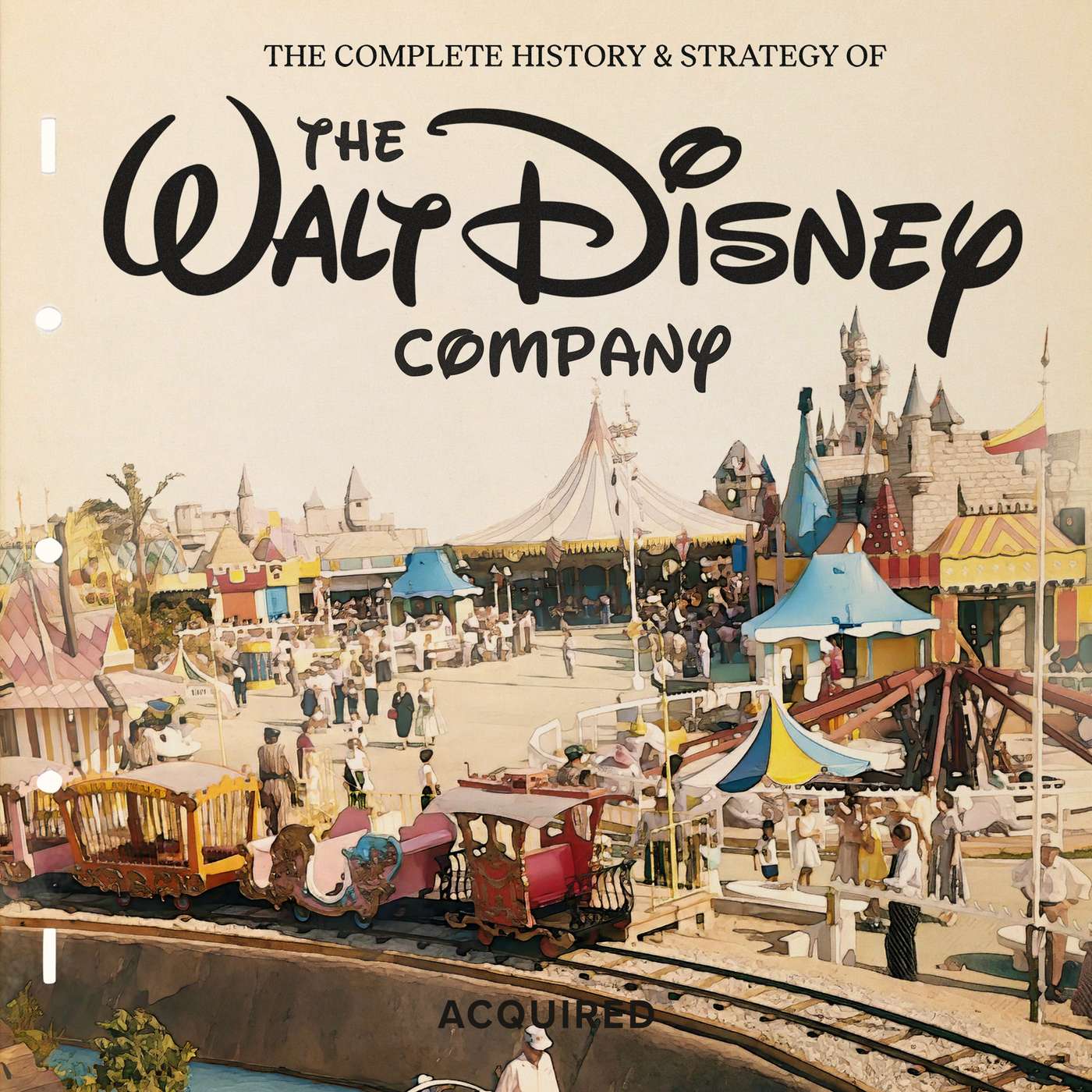
This episode of 'Acquired' tells the story of The Walt Disney Company from its founding through Walt Disney's death in 1966. It focuses on the business and technology innovations that made Disney unique, especially the creation of the 'IP flywheel' business model. Key insights include how Disney mastered animation, merchandise, theme parks, and television to build a durable, self-reinforcing entertainment empire.

Summarized by Podsumo
Disney invented the intellectual property flywheel: great animated films generate demand for merchandise, theme parks, and re-releases, which in turn fund more great films.
Losing Oswald the Lucky Rabbit in a contract dispute taught Walt the existential importance of owning IP—a lesson that led to Mickey Mouse and defined Disney's culture.
Snow White (1937) was a $1.5M bet that became the highest-grossing film of its era, proving that feature-length animation could be both art and commerce.
The 1955 opening of Disneyland, financed partly by a TV deal with ABC, created a new node in the flywheel: parks became both an experience and a marketing engine for films.
Despite Walt's death in 1966, the company he built—with its flywheel, vault re-release strategy, and relentless focus on quality—remained the template for all future entertainment empires.
"We had decided there was only one way we could successfully do Snow White, and that was to go for broke, shoot the works. There would be no compromise on money, talent, or time."
"Our product is practically eternal."
"I said, television is going to be my way of going direct to the public. I said, Roy, this television thing can be the greatest thing because we will be going direct to the public."