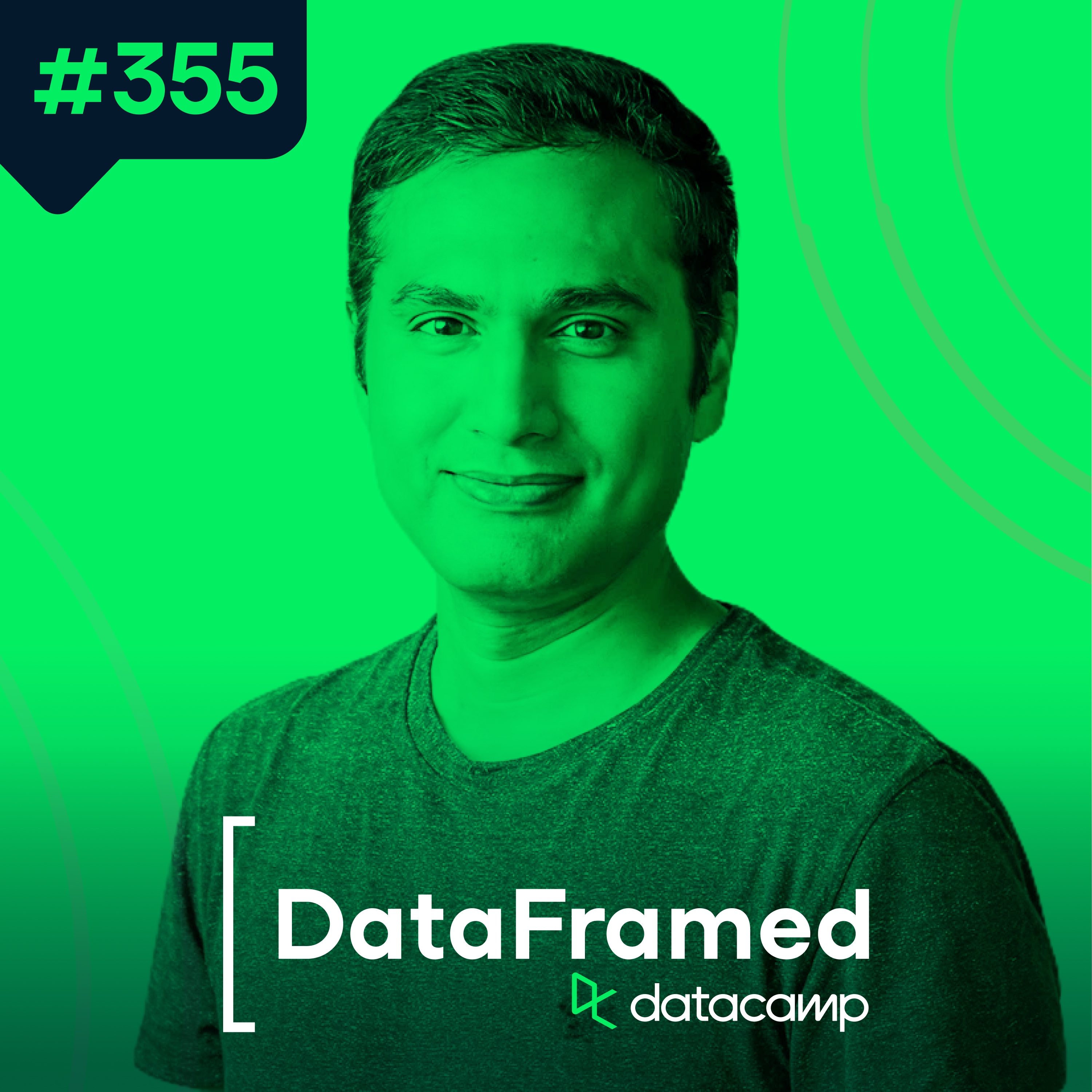
This episode of DataFramed explores the transformative impact of AI on databases and the broader data stack, featuring Shireesh Thota, CVP of Databases at Microsoft. It delves into Microsoft's unified data platform, Fabric, which aims to simplify complex data architectures and enable deeper reasoning with data through semantic models and ontologies. The discussion also covers the evolving role of data professionals, the continued importance of SQL and data modeling, and Microsoft's embrace of open-source technologies.

Summarized by Podsumo
Unified Data Platform (Fabric): Microsoft's Fabric integrates various data services (integration, science, engineering, analytics, BI) into a single SaaS-like environment with a unified data lake using open-source formats, simplifying the previously fragmented data stack.
AI and Data Reasoning: AI agents necessitate robust data context, achieved through semantic modeling and ontologies, to prevent hallucinations and enable sophisticated reasoning over data, moving beyond simple deterministic queries.
Importance of SQL & Data Modeling: Despite AI's ability to generate SQL, understanding SQL and, more critically, data modeling fundamentals remains essential for optimizing performance, ensuring consistency, and effectively translating business objectives into data structures.
Microsoft's Open Source Commitment: Microsoft has significantly embraced and contributes heavily to open-source databases like PostgreSQL and has introduced DocumentDB as an open-source NoSQL alternative, reflecting a shift in strategy.
Cosmos DB for Scale: Cosmos DB is highlighted as a mission-critical, geo-distributed NoSQL database designed for enormous scale and high availability, supporting applications like ChatGPT and Microsoft Teams messaging with JSON-based data handling.
"If you just use an agent, it can easily hallucinate. The answer to solving that question, the simplest one is to make sure that you really have the right context of the data."
"My personal recommendation is that absolutely. And this is one of those things where it's less the case about really not having to gain deep expertise about how you know, could you really run, could you write a CTA expression yourself? It's less about that. It's more about trying to really understand what your data model is."
"The one thing that massively changes is the ability to reason with data."