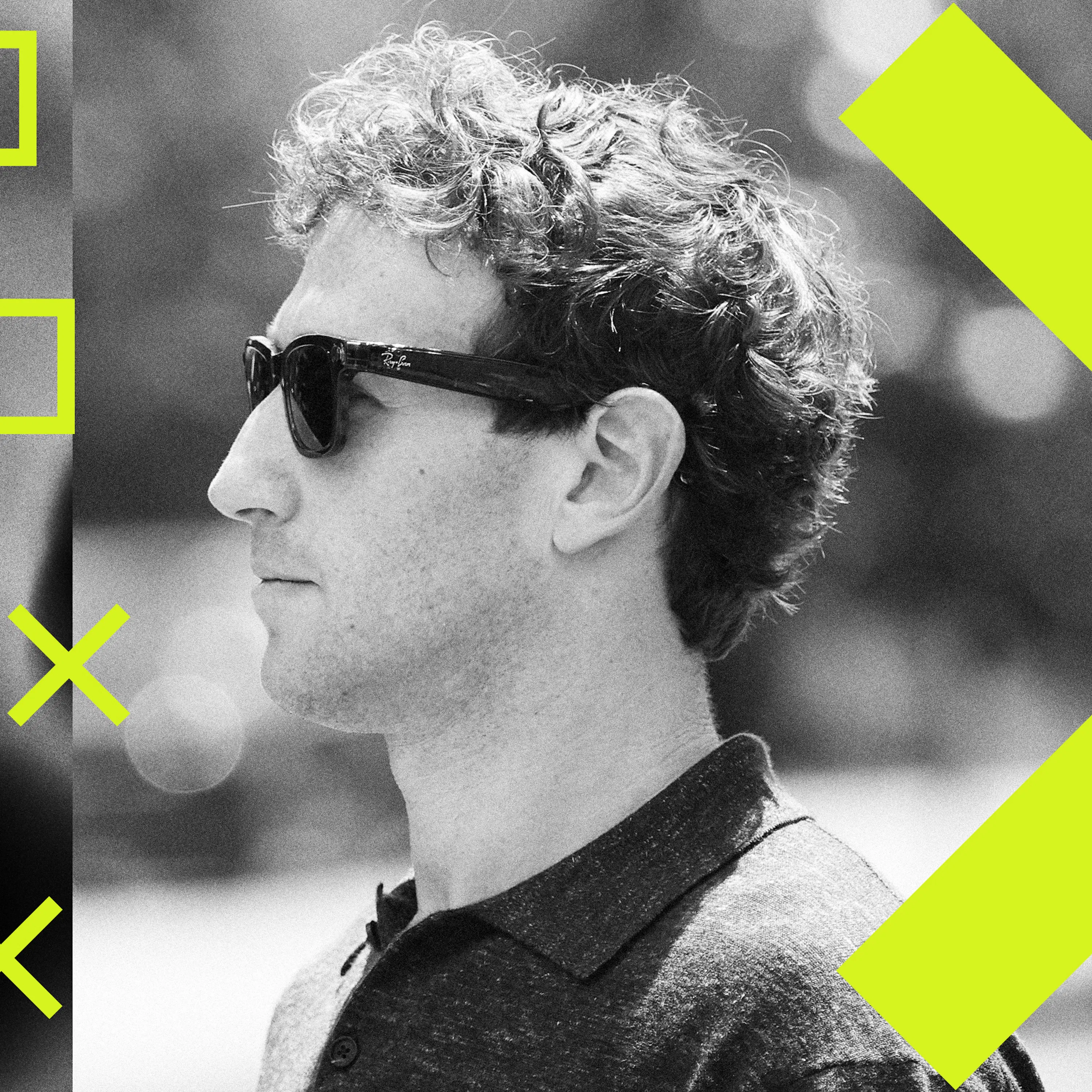
The episode critiques Mark Zuckerberg's recent interview, focusing on Meta's stance toward passive surveillance via Meta glasses, teen safety on social platforms, AI safety versus social media regulation, and the company's grand ambitions for Muse AI. Nilay Patel highlights gaps in Meta's arguments, such as the double standard on government intervention and the market's role in safety.

Summarized by Podsumo
Meta's Meta glasses are framed as passive surveillance devices; the physical act of recording with glasses differs significantly from phones, yet the tech industry tries to equate them.
Zuckerberg argues teen safety on Instagram must be regulated governmentally to solve a 'prisoner's dilemma,' but he opposes similar regulation for AI safety, believing the market will handle it.
Meta's planned business model for Muse AI is aggregation-based, taking a small cut of transactions, echoing Apple's App Store model, which Zuck himself criticizes.
The episode questions whether consumer AI products like Muse will be compelling enough to overcome skepticism about data center costs and societal harms.
Zuckerberg's comments on data center benefits (e.g., teacher bonuses in Louisiana) are contrasted with secretive backroom deals for tax exemptions, raising transparency concerns.
"I think it's very important to note that the entire tech industry really wants passive surveillance devices to fit into the same category as phones."