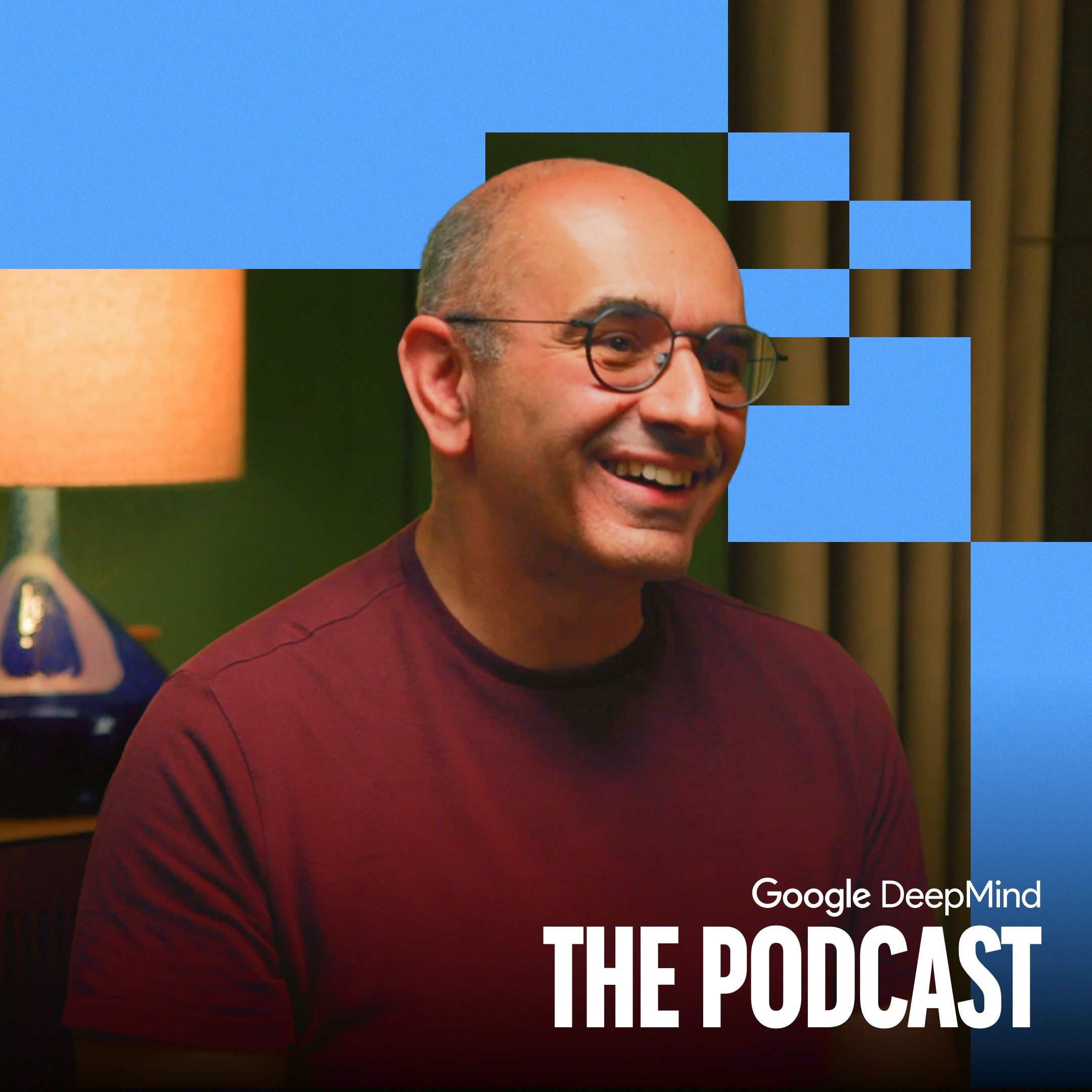
This episode of Google DeepMind: The Podcast explores why uncertainty is crucial for intelligent AI. Zubin Garamani argues that current systems lack self-doubt and need Bayesian probability to make rational decisions, especially in critical domains like self-driving cars and medicine. The discussion contrasts the 'scale alone' approach with the need for explicit uncertainty representation to achieve reliable, trustworthy AI.

Summarized by Podsumo
The difference between aleatoric uncertainty (inherent randomness like a coin flip) and epistemic uncertainty (lack of knowledge, like a new scenario) is critical for appropriate AI behavior—e.g., a self-driving car should slow down when uncertain, not just when random.
Current LLMs 'fake' uncertainty by mimicking human hedging, but they lack explicit probability representation, leading to overconfident hallucinations and flip-flopping when challenged.
True Bayesian learning enables continuous adaptation without catastrophic forgetting, but it's computationally expensive (NP-hard)—a challenge Garamani thinks can be overcome with smarter approximations and modern compute.
"If you want to build an intelligent system, you need a system that can represent uncertainty, update its uncertainty, and then use that to make good decisions under uncertainty. — Zubin Garamani"
"It's not correctness alone that matters—it's actually correctness and confidence. We don't want systems that can be overconfidently wrong. — Zubin Garamani"
"I would rather have an AI system that knows when it doesn't know than an AI system that is arrogant and overconfident. — Zubin Garamani"