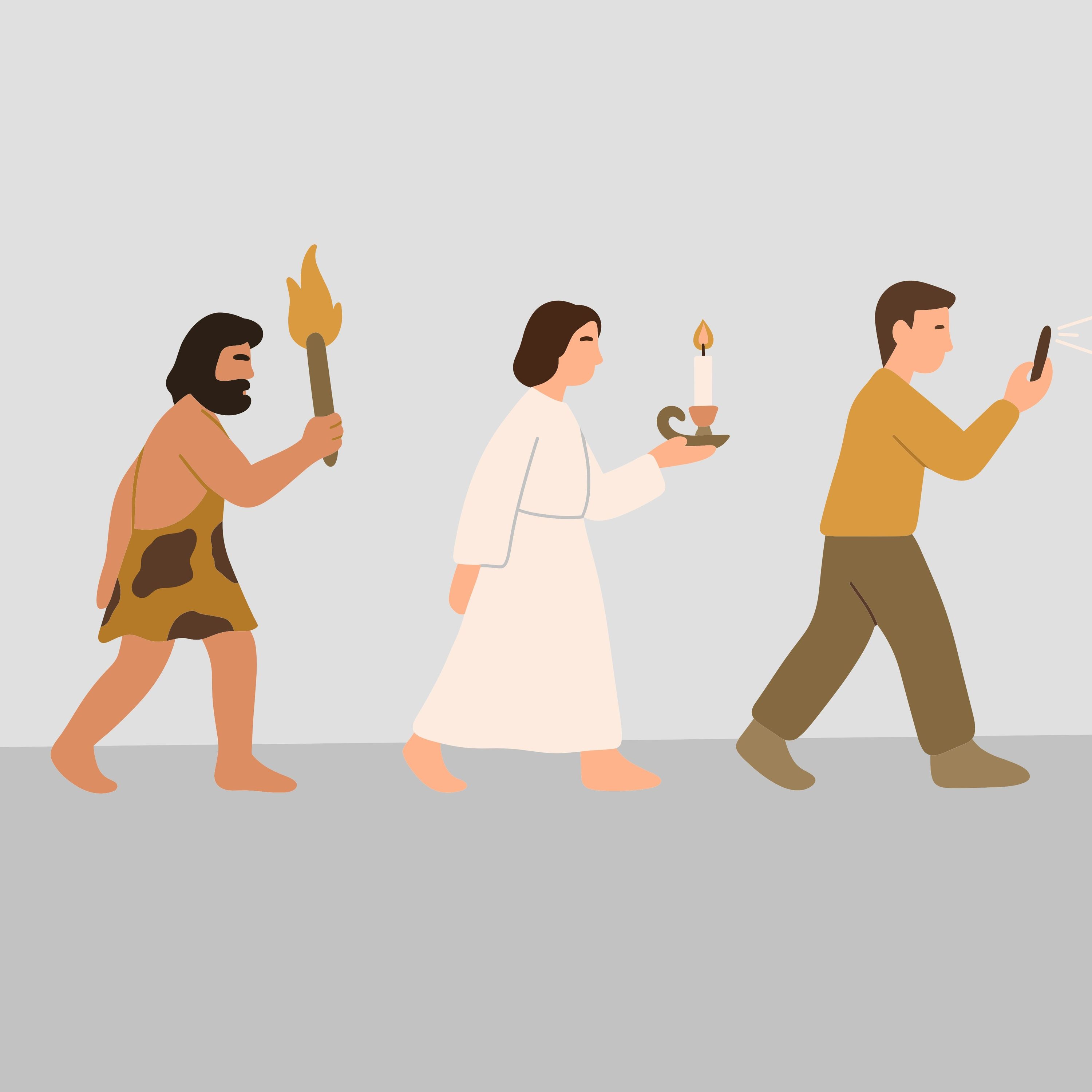
This episode of Hidden Brain explores how ancient cultural inventions, such as mechanical clocks and the Catholic Church's marriage rules, continue to shape modern psychology, behaviors, and societal structures. Anthropologist Joseph Henrick reveals that practices like punctuality, individualism, and the nuclear family are historically unique products of specific cultural evolution, not universal human traits.

Summarized by Podsumo
The invention of mechanical clocks in 13th-century Europe transformed time from a seasonal rhythm into a commodity, directly linking punctuality with economic productivity and moral virtue.
The Catholic Church's medieval ban on cousin marriage and promotion of nuclear families inadvertently broke down kin-based clans, fostering individualism, voluntary associations, and the institutions that sparked the Industrial Revolution.
The Franklin expedition's failure in the Arctic contrasts with Inuit survival, illustrating the 'cultural intelligence hypothesis': human success relies on accumulated cultural knowledge, not raw intelligence.
Gene-culture co-evolution shows how cooking and monogamy have physically reshaped human biology, from smaller stomachs to testosterone levels varying by marriage system.
WEIRD (Western, Educated, Industrialized, Rich, Democratic) societies exhibit unique psychological traits like analytic thinking and fairness to strangers, rooted in market integration and historical church policies.
"The past is never dead. It's not even past."
"Time thrift, thinking of time as money, is a modern invention that wasn't natural for most of human history."
"Our brains evolved to acquire, store, and organize cultural information, not to individually solve problems. That's the cultural intelligence hypothesis."