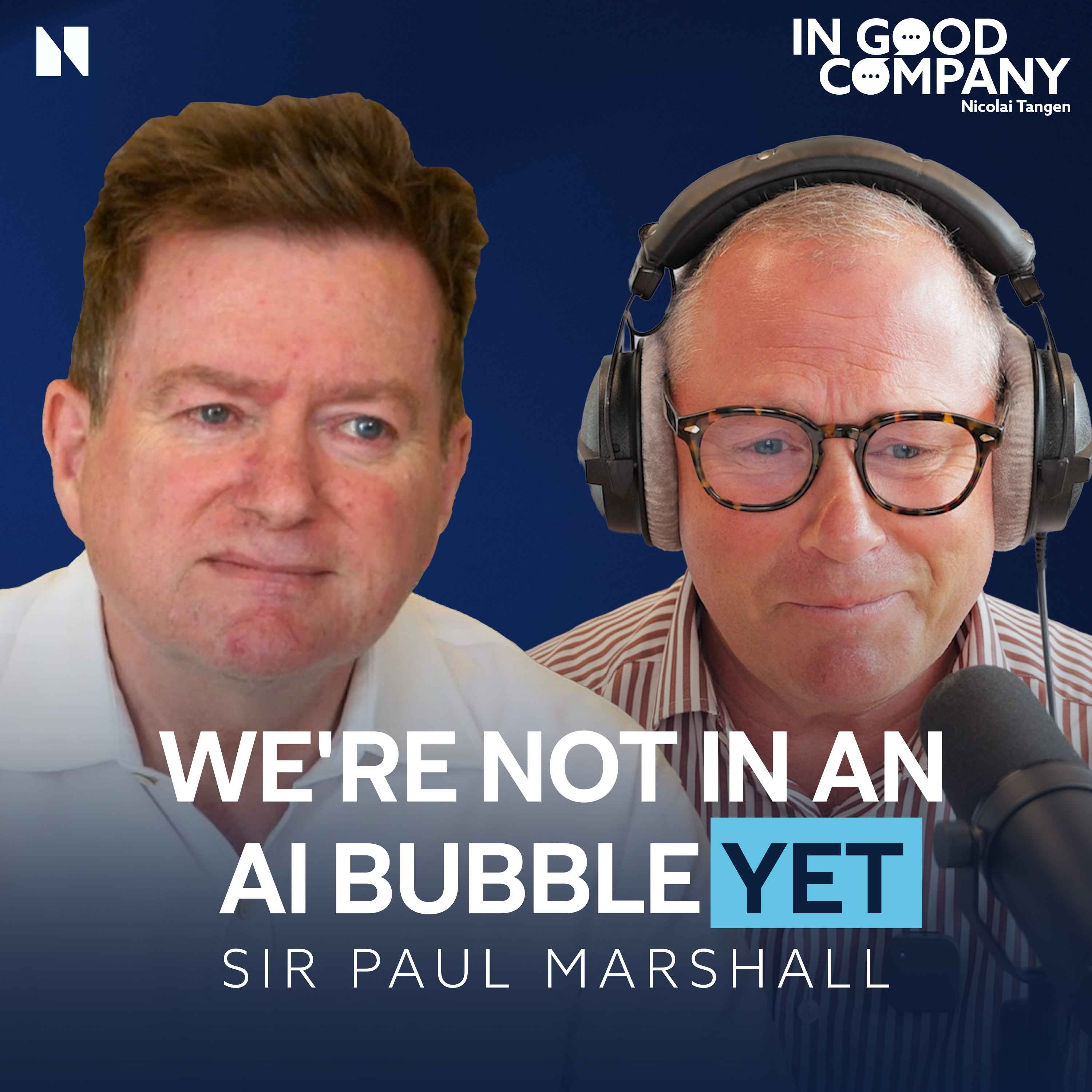
Sir Paul Marshall, co-founder of Marshall Wace, discusses how the hedge fund firm has thrived for nearly 30 years through continuous innovation, blending fundamental and systematic investing, and building TOPS, the world's first alpha capture system. He shares insights on market competition, the challenges of shorting, the transformative potential of AI, and his philanthropic and media ventures. The conversation also covers his contrarian views on education, Brexit, and the importance of high agency and disagreeableness in investing.

Summarized by Podsumo
Marshall Wace manages $90 billion and combines man and machine, claiming expertise in alpha capture (via their proprietary TOPS system) and integrating discretionary with systematic investing for strong synergy.
Paul Marshall argues markets are getting more efficient due to AI, but human analytical edge and pattern recognition remain crucial; he expects a future bull market in AI with periodic overheating but no bubble yet.
Shorting is difficult due to ecosystem bias against negativity, risk management challenges (positions grow when wrong), and high borrowing costs; Marshall finds it more enjoyable than longs but calls it a 'nightmare' as a full-time profession.
The firm prioritizes traits like agency, curiosity, and disagreeableness over traditional academic credentials in hiring; they have a 10-year path for analysts to become portfolio managers.
Marshall's philanthropy focuses on education through ARK, which has turned around failing schools in the UK, and he controversially entered media to challenge 'tribal' thinking, notably with GB News and The Spectator.
"If you look at the success ratios of managers, a really good manager might have a 53-54% success ratio. So 46% of the time they're wrong. So every day, one day in two, you go home feeling you're a schmuck."
"The single most important thing is continuous innovation. ... We have gone well beyond that and effectively embraced every type of innovation to the point where we're almost now a tech firm rather than an investment management firm."
"What remains, in my opinion, is the skill of judging the market, judging how the market behaves in particular circumstances. ... There's a whole balance of things which include both the fundamentals and the technical situation and the ecology of the market, which I don't think a machine yet will be very good at."