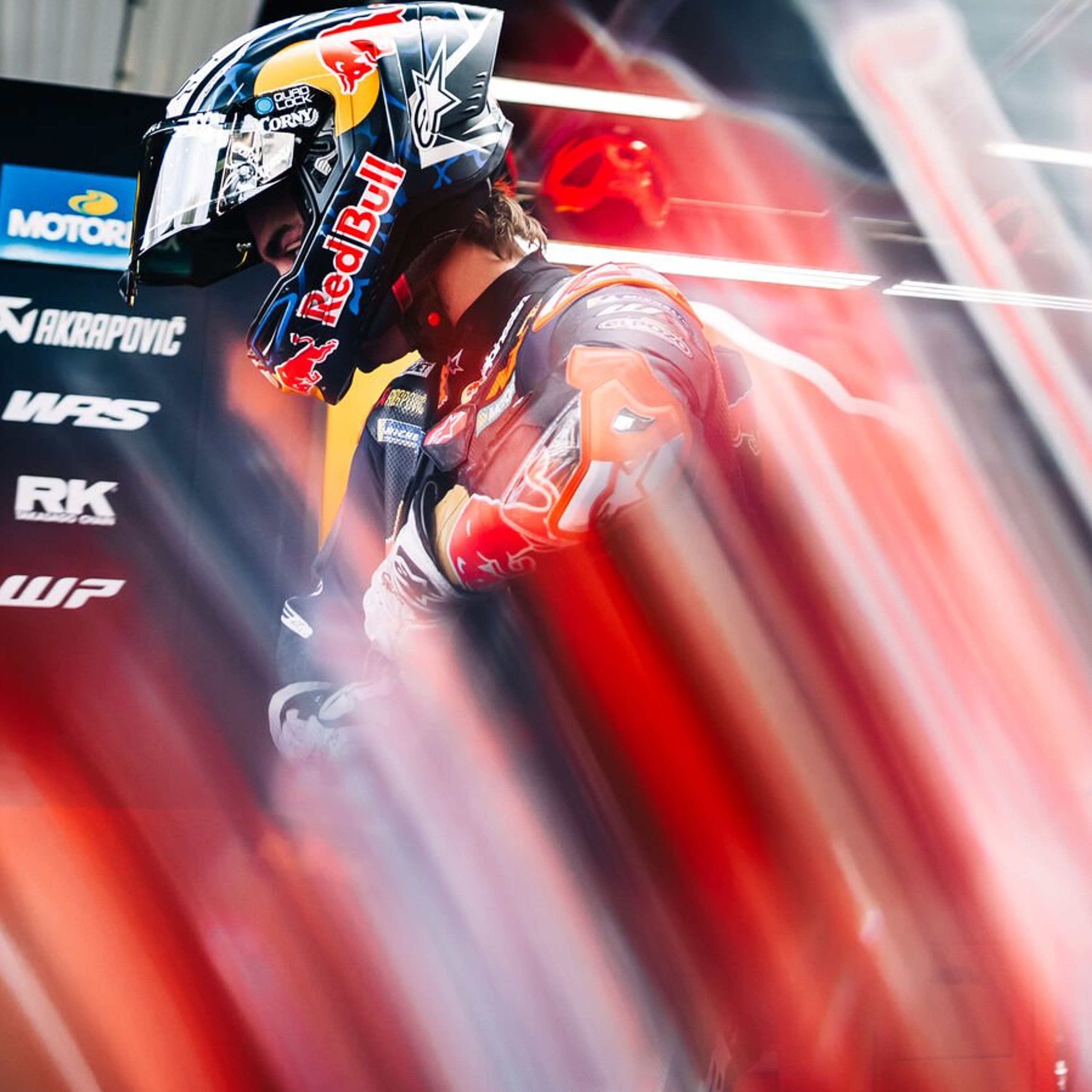
MotoGP photographer Rob Gray discusses the art, business, and logistics behind racing photography. He reveals how he transitioned from a fan shooting through fences to working with top teams, the challenge of balancing creative ambition with commercial demands, and the impact of sprint races on photographers' time. Gray also shares his gear, tips for breaking into the industry, and the practical realities of shooting at different circuits.

Summarized by Podsumo
Sprint races have squeezed photographers' creative time because they must prioritize bread-and-butter shots over experimental ones.
To break into MotoGP photography, you need to work for a media outlet that can sponsor your accreditation โ not directly apply to the sport.
Gray uses a Canon R1 with a 400mm f/2.8 prime as his main rig, but also carries a mini studio for creative pit-lane shoots.
He loves Silverstone because he can drive there and sleep at home, even though it's logistically the hardest circuit for photographers.
Rider personalities vary: Brad Binder is purely focused on performance, while Johann Zarco is collaborative and creative during photo shoots.
"The moment you give a team that really special shot, you can see theyโre like, 'Oh wow, this is super cool! I canโt wait to use this.'"
"I didn't want to take the same pictures as everyone else... when you first start, you actually have the most freedom and the most creative time."
"It's just like any job โ you have to read the room. Brad is amazing, but unless it's going to make him faster, it's not a priority."