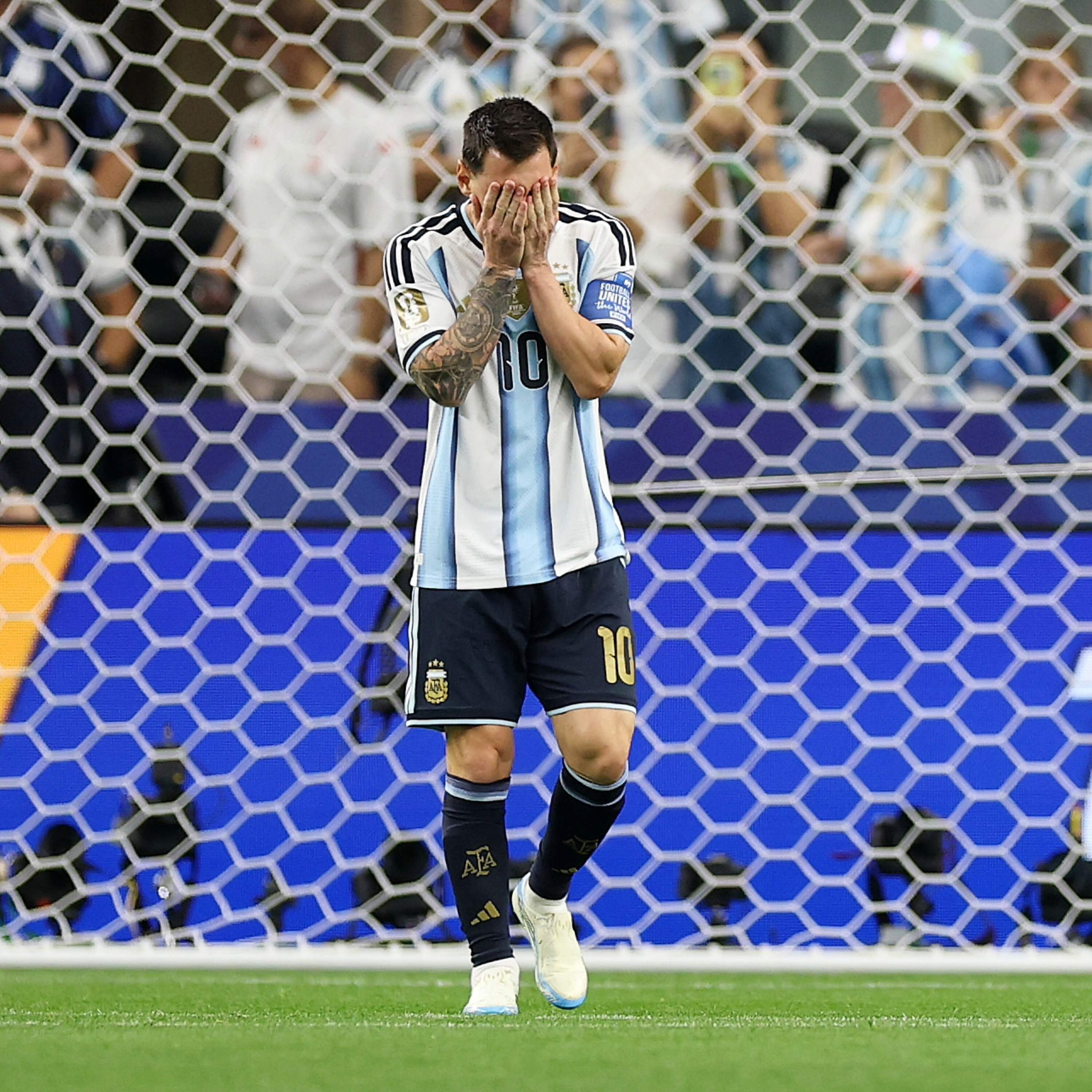
This episode of Planet Money explores how game theory, particularly mixed strategies, is applied to penalty kicks in soccer. The podcast discusses how penalty takers and goalkeepers must randomize their choices to remain unpredictable, and how economist Ignacio Palacios-Huerta built a database of thousands of penalties to give teams a competitive edge. The episode highlights the mind games, data analysis, and psychological tactics that have transformed penalty shootouts from a lottery into a strategic battle.

Summarized by Podsumo
Lionel Messi is a surprisingly poor penalty taker despite being one of the best soccer players ever, due in part to the strategic demands of unpredictability.
Game theory's mixed strategy concept, where players must randomize their actions to avoid being predictable, applies perfectly to penalty shootouts.
Economist Ignacio Palacios-Huerta collected a database of thousands of penalties, which helped Chelsea in the 2008 Champions League final, though his advice ultimately backfired.
Goalkeepers now carry "crib sheets" taped to their water bottles, and kickers know this, creating a layer of psychological gameplay.
The advantage of shooting first in a penalty shootout has diminished as teams have become more data-savvy and prepared for the psychological pressure.
"Everyone who takes a penalty has a good side and a bad side, almost everybody. And you might think that you'd always shoot to your best side, but if you do that, you're predictable."
— Stefan Szymanski
"What's happening here is that both sides are in a mirror image situation. The penalty taker is trying to choose whether to go left or right. And the goalkeeper... has to choose before the ball is hit which way to dive."
— Ashish Malhotra
"Van der Sar is standing on his goal line like this, massive figure. And before Anelka runs up, Van der Sar points left to his left. And he's saying to Anelka, 'I know what you guys are doing. You're all going left.'"
— Simon Kuper