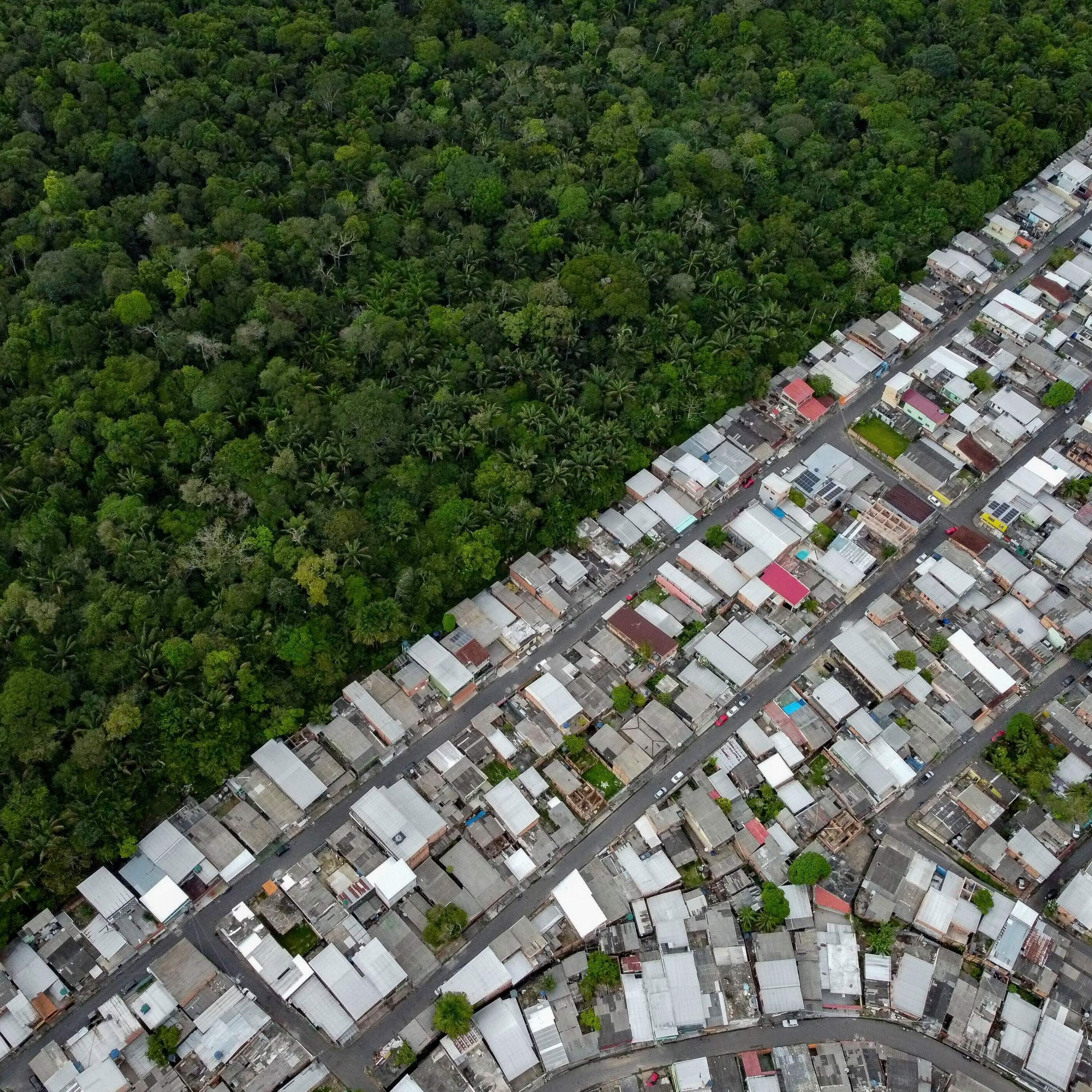
Brazil's Manaus industrial zone exemplifies the 'middle-income trap,' where developing nations struggle to move beyond assembly-line manufacturing despite heavy subsidies. The episode explores why the classic industrialization blueprint fails for many countries today, highlighting the need for innovation and unique economic advantages.

Summarized by Podsumo
Manaus, a city of 2 million in the Amazon rainforest, was transformed by Brazil's military dictatorship into a manufacturing hub through tax breaks, producing most of Brazil's TVs, microwaves, and motorcycles.
The 'middle-income trap' describes countries that industrialize but cannot advance to high-income status, unlike South Korea or Singapore, due to stagnant manufacturing and lack of global competitiveness.
Brazil's premature de-industrialization leaves factory workers less productive than before, but emerging sectors like advanced agriculture and biodegradable plastics offer new paths.
Unlike East Asian 'miracle' economies that forced exports, Manaus's factories depend on subsidies and mostly assemble imported components, failing to develop local high-tech capabilities.
"Without the incentives, what would happen to Manaus? We would lose automatically the pole because it would be economically viable. It's not possible to do this stuff here without the incentives."
"Bosco Sariva, head of Zona Franca"
"I think the remarkable success we can count in our fingers is Singapore, China, South Korea, Taiwan. That's it, man."
"Mayara Felix, economics professor at Yale"
"Brazil is the country of the future. That's what we say. It's something people in Brazil have been saying for a long time. And of course, it becomes the joke because the future never comes."
"Mayara Felix"