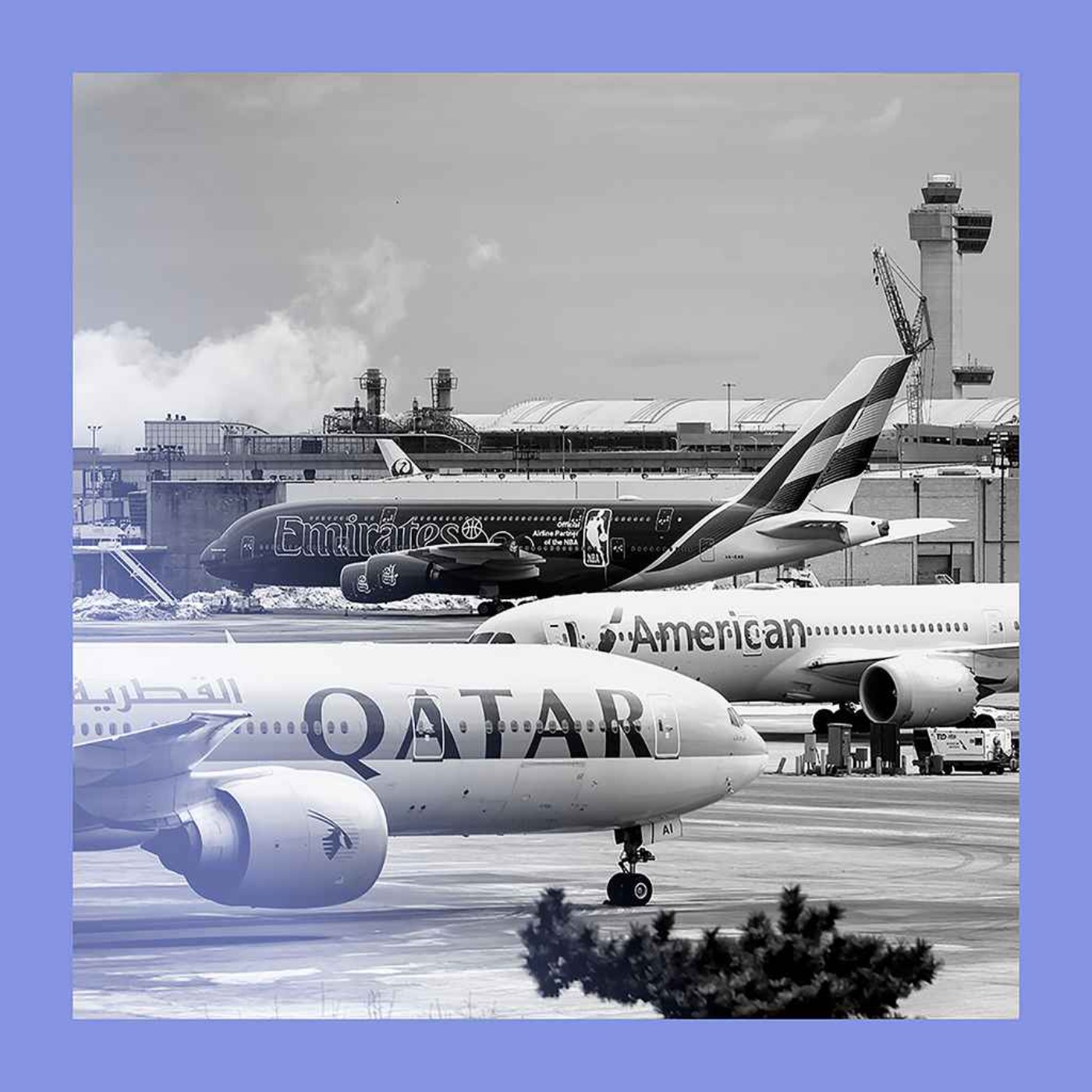
The Middle East conflict is significantly disrupting global aviation, threatening the region's role as a vital hub for long-haul flights. Soaring jet fuel prices, exacerbated by disruptions in the Strait of Hormuz and shifts in refining, are increasing costs for airlines worldwide, with uneven impacts depending on carrier type and hedging strategies.

Summarized by Podsumo
The Middle East, home to "super connector" Gulf carriers like Emirates, Etihad, and Qatar, has become a crucial global aviation hub, a role now imperiled by the conflict.
Airspace closures and rerouting due to the conflict, compounded by existing avoidance of Russian airspace, are adding flight time and fuel consumption for many airlines.
Jet fuel prices have surged significantly due to disruptions in the Strait of Hormuz (affecting 20% of global supply) and a shift in refining from Europe to Asia.
The impact is uneven: low-cost carriers are hit harder, and major US and Chinese airlines, which typically don't hedge fuel prices, could face billions in losses.
The episode also noted the struggles of plant-based meat products due to taste and "ultra-processed" concerns, and how AI models struggle to accurately parse PDF file formats.
"The events in the Middle East are a reminder that the region is not only crucial for global supplies of oil and gas coming through the strait of all mues, but it's a vital conduit for the world's airline passengers."
— Simon Wright
"So really all of this will impact kind of all the airlines even the ones that don't even fly to through or over the region. Yes, absolutely, but the impact will be uneven."
— Simon Wright
"Large language models behind Generate AVI are often very confused by PDFs."
— Shira Aviono