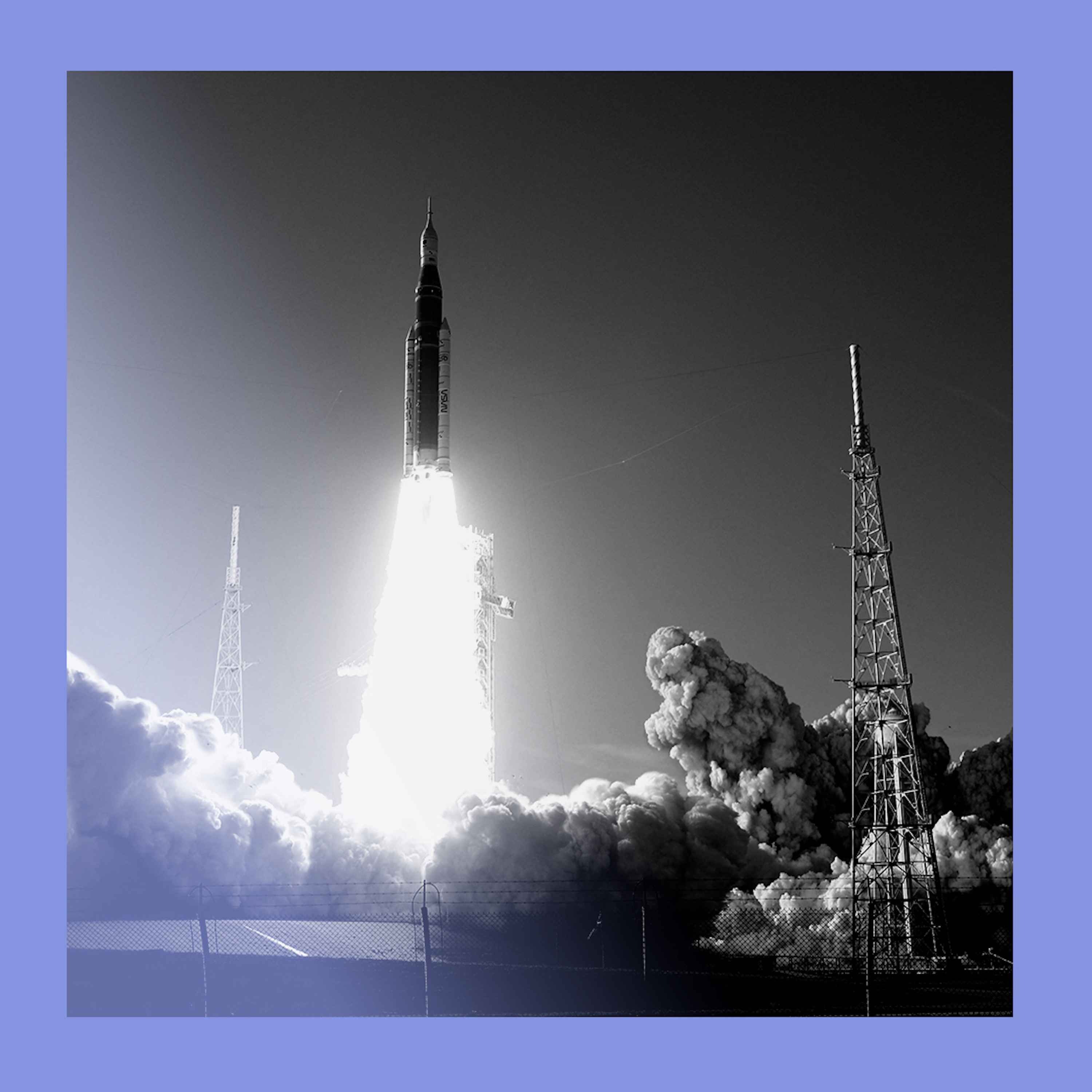
This episode details the launch of Artemis II, the first crewed mission to orbit the Moon in over 50 years, highlighting its role in paving the way for future lunar landings and a potential moon base. The mission is framed as a geopolitical "space race" against China and a reassertion of American national identity. The podcast also briefly touches on the disparity in Large Language Model performance across different languages and the rise of "influencer officials" in China using social media.

Summarized by Podsumo
Artemis II is the first crewed mission to the Moon's vicinity in over 50 years, serving as a precursor to Artemis III (moon landing) and Artemis IV (moon base), aiming for an "enduring process" like an Antarctic research station.
The primary motivation for the Artemis program is a geopolitical "space race" against China, which plans to put people on the moon by 2030, and a reassertion of American prestige and national identity.
Large Language Models (LLMs) exhibit significant performance disparities across languages, performing 12-20 percentage points worse in non-English languages, especially in critical areas like medical advice, due to English-centric training data and inefficient tokenization.
Chinese Communist Party officials are becoming "influencer officials" on social media, using platforms like Douyin to demonstrate diligence, gain public support, and even secure promotions, driven by pressure from Xi Jinping against bureaucratic laziness.
"The point of the Artemis II mission is effectively the Artemis III mission, the point of the Artemis III mission is the Artemis IV mission."
— Oliver Morton
"You got to remember that the moon missions of the 1966s were effectively as a super power flex."
— Oliver Morton
"One of the authors said that they saw performance as at the level of an English language model from five years ago in terms of accuracy."
— Dina