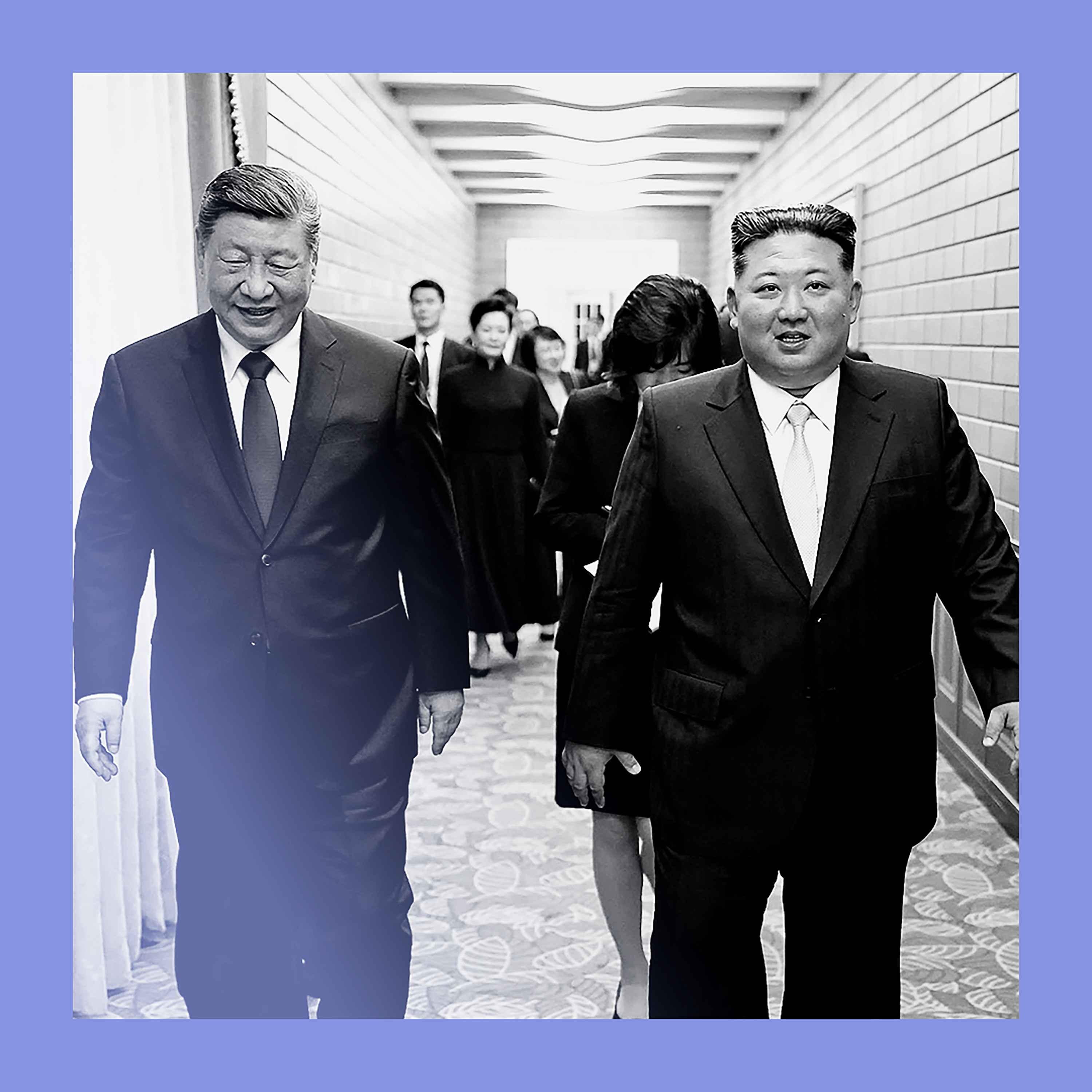
This episode of The Intelligence from The Economist covers Xi Jinping's visit to North Korea, highlighting China's shift from pressuring North Korea on denuclearization to countering Russian influence and preparing for potential US summits. It also explores life under M23 rebel occupation in Congo and the threat to Japan's Indian curry restaurants due to tightened visa rules.

Summarized by Podsumo
Xi Jinping's visit to Pyongyang focuses on renewing ties with Kim Jong-un, but not on denuclearization; China is more concerned about Russian influence in North Korea.
North Korea has 50-60 nuclear warheads and can produce 10-20 more annually, with Kim Jong-un declaring his nuclear status irreversible.
M23 rebels in eastern Congo are trying to build a state within a state, offering mineral deals to the West while humanitarian conditions deteriorate.
Japan's Indian curry restaurants, mostly run by Nepalese, face closure due to a new visa rule requiring $190,000 in capital, up from $30,000.
An online petition against the visa rule has gathered tens of thousands of signatures, highlighting the cultural and economic importance of these restaurants.
quotes': `[{
"Kim Jong-un's sister declared that North Korea's nuclear arms status was irreversible, just before Xi's visit."
"Cornel Nanga, M23's political leader, pitches to the US: 'They want mineral. Come, let's discuss. We are Congolese. And those minerals are ours.'"
"Sanjay Sahani, a Nepalese restaurant owner in Tokyo, says: 'If these restaurants disappear, it would be lost for Japan as well.'"